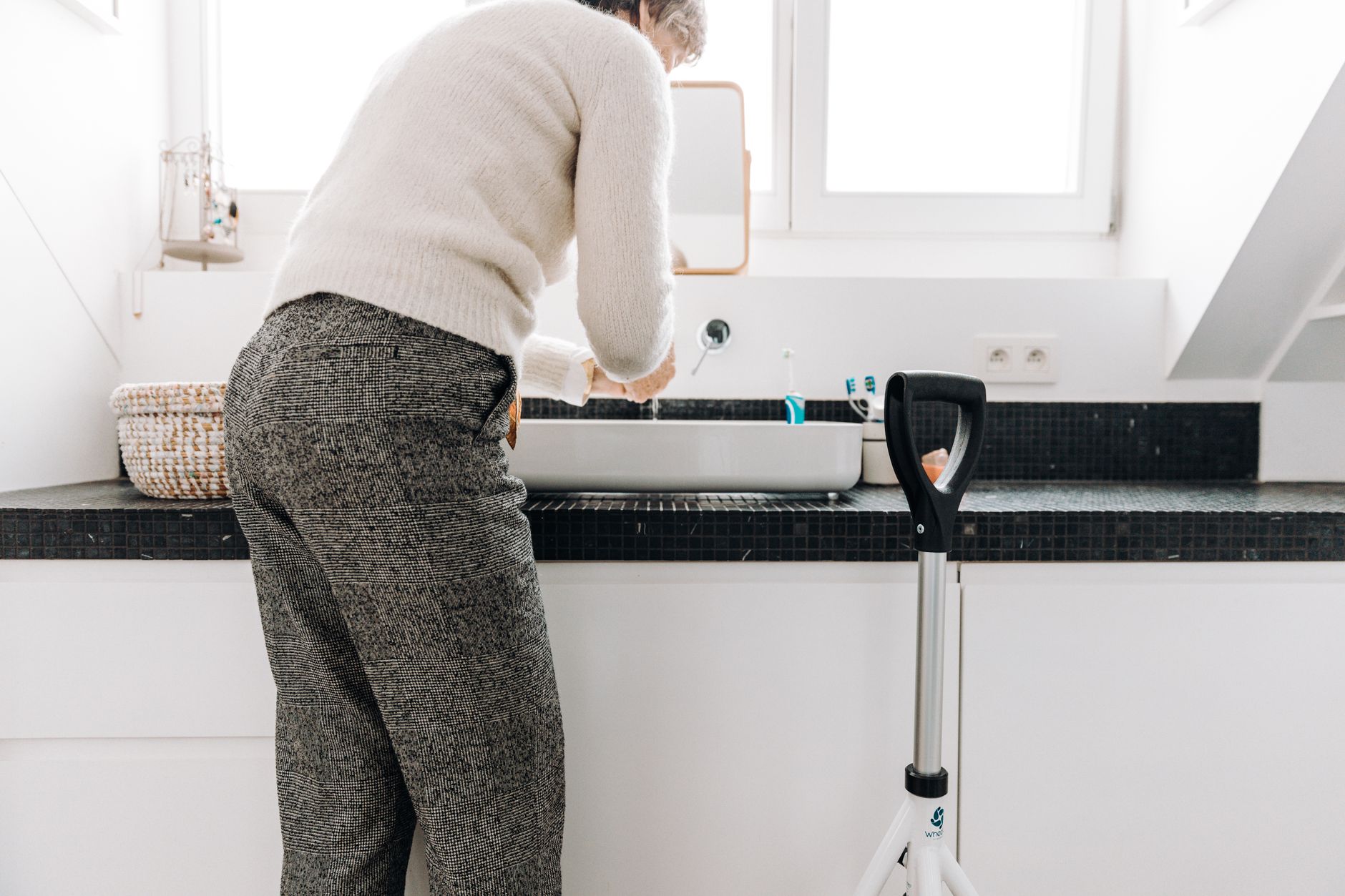
What to Do When an Elderly Parent Refuses to Bathe
A parent who stops bathing isn't being difficult on purpose. Fear of falling, physical pain, loss of privacy, cognitive changes, and depression can all make the bathroom feel threatening. Before you push harder, it helps to understand which one you're actually dealing with. The right approach depends entirely on the root cause.
Quick answers
- Check for physical barriers first: pain, dizziness, fear of falling, or difficulty undressing may be making bathing genuinely hard.
- Cognitive decline (dementia) often causes bathroom resistance because the process feels confusing or frightening.
- Depression and grief can reduce a person's interest in self-care , it's a symptom, not stubbornness.
- Adaptive tools (grab bars, shower chairs, handheld showerheads) remove real obstacles and often solve the problem without a fight.
- If resistance is sudden or combined with other behavioral changes, talk to their doctor , it may signal an infection, depression, or medication side effect.
Why Elderly Parents Refuse to Bathe
Refusal to bathe is one of the most common caregiving complaints, and it almost always has a reason behind it. The hard part is figuring out which reason.
Fear of falling is the most common physical cause. Bathrooms are genuinely dangerous for older adults , wet tile, slippery tubs, nothing to hold onto. If your parent fell before, or has watched a peer fall, that fear is rational.
Pain and physical difficulty come second. Arthritis, hip problems, and reduced flexibility make getting in and out of a tub genuinely painful. Some people stop bathing because it hurts, and they don't say so.
Loss of privacy and dignity ranks high, especially for parents who've always been independent. Being seen undressed by an adult child is humiliating for many people, and they'd rather smell bad than lose that dignity.
Cognitive changes shift the picture entirely. Someone with dementia may not recognize that they're dirty, may not remember how bathing works, or may find the whole experience disorienting and frightening. Arguing won't help because the logic isn't accessible to them.
Depression and Grief Can Look Like Stubbornness
Reduced interest in self-care is a classic symptom of depression, and depression is common in older adults going through major losses , a spouse, a home, independence, friends.
If your parent has recently experienced a significant loss and has also stopped bathing, don't treat it as a hygiene problem. Treat it as a possible mental health symptom and bring it to their doctor.
The same applies to grief. A parent who is actively grieving may stop caring about their appearance as part of the grieving process. This usually resolves with time and support, not pressure.
Adaptive Equipment That Actually Helps
Sitting down to shower removes the fear of standing on wet surfaces and makes the whole process less exhausting. A transfer bench lets someone slide in from outside the tub rather than stepping over the edge.
Costs $30-60 at any hardware store and makes rinsing dramatically easier when mobility is limited. Also useful for caregivers helping from outside the shower.
Not suction-cup grab bars , those fail. Proper grab bars anchored into studs cost $80-200 installed and make the bathroom safer. Many home health agencies or local Area Agency on Aging offices can help with installation.
Cheap, immediate, and often makes a significant difference in how safe the bathroom feels.
On days when a full shower isn't happening, these handle the hygiene basics without requiring a bathroom visit. Products like Comfort Bath cleansing washcloths are widely used in home care.
How to Approach the Conversation
Ask, don't announce
Instead of 'You need to shower,' try 'I noticed the bathroom setup might be uncomfortable , can you tell me what part is hardest?' Most people will tell you the truth if asked genuinely.
Offer choices, not commands
Autonomy matters enormously to older adults. 'Would you rather shower in the morning or evening?' or 'Would you prefer a bath or a shower today?' gives them control within a structure you've defined.
Change who's helping
Many people will accept help from a paid caregiver or nurse when they won't from an adult child. The dynamic is different , it feels less like a parent-child reversal. If this is a real barrier, a home care aide for bathing assistance may solve the problem immediately.
Adjust the frequency expectation
Daily bathing is not medically necessary for most older adults and can actually dry out skin. Twice a week with sponge baths in between is often medically sufficient. You may be fighting a battle you don't need to fight.
Make it comfortable and pleasant
Warm the bathroom first. Have everything ready before they get in. Use their preferred soap. Play music they like. Reduce the friction of the whole experience, and the resistance often follows.
When This Is About Dementia
Bathing is one of the most common conflicts between dementia patients and caregivers. The disorientation, the vulnerability, the sequence of steps , all of it can feel threatening to someone whose cognition is impaired.
Force never works with dementia. It escalates agitation and can lead to real physical confrontation. The goal is to make the experience feel safe and familiar, not to win.
Some strategies that work: bathing at the same time every day so it becomes routine. Keeping one consistent caregiver for bathing. Breaking it into small steps and narrating each one calmly. Minimizing the time in the bathroom by having everything ready first.
If your parent with dementia has become combative about bathing, ask their neurologist or geriatrician for guidance. There are specific behavioral approaches and, in some cases, short-term medications that reduce the distress.
When to Call the Doctor
Call the doctor if bathing refusal is sudden, if it's combined with confusion, agitation, or changes in behavior, or if you notice signs of a skin infection (redness, sores, unusual odor). Urinary tract infections frequently cause behavioral changes in older adults and can look like stubbornness or confusion. A sudden change in hygiene habits is always worth a medical check.
What the Numbers Look Like
When You've Tried Everything
If your parent flatly refuses bathing despite adaptive equipment, gentle approaches, and professional help, and their hygiene is creating a health or safety risk, talk to their primary care doctor about a formal assessment.
A geriatric care manager can do a home assessment and identify barriers you may have missed. An occupational therapist can evaluate the bathroom setup and recommend specific modifications.
For parents with dementia, Adult Protective Services can sometimes be involved if self-neglect poses a danger , but this is a last resort, not a first step.
For most families, the solution is simpler: change who's helping, make one equipment change, or reduce the pressure. The battle you're having in the bathroom is often solvable without a fight.
Step 1 of 2
How big is the home?
Step 2 of 2
What kind of help is needed?
Estimated Cost
Compare listed Senior Move Managers →Frequently Asked Questions
Is it normal for elderly people to refuse to bathe?
Yes, it's very common. Physical pain, fear of falling, cognitive changes, depression, and loss of dignity can all contribute. 'Stubborn' is rarely the right explanation. Most refusal has a reason, and finding the reason is the first step to solving it.
How often should an elderly person bathe?
Most geriatricians recommend 2-3 times per week for older adults. Daily bathing isn't necessary for most people and can actually dry out aging skin. Sponge baths or no-rinse wipes can handle hygiene between full baths.
What do I do if my parent with dementia refuses to bathe and becomes aggressive?
Don't force it. Forcing bathing with a dementia patient typically escalates agitation and can lead to physical confrontation. Try a different time of day, a different caregiver, or smaller steps. Talk to their neurologist if the situation is unsafe , there are specific behavioral strategies and sometimes short-term medications that help.
Can I hire someone to help my parent bathe?
Yes, and this often works when family members can't. Home care aides provide personal care including bathing assistance, typically at $20-35/hour. Many people accept help from a professional caregiver that they refuse from an adult child because the dynamic feels different , less like a loss of dignity.
Sources
- National Institute on Aging - Alzheimer's and dementia care information
- Alzheimer's Association - Dementia caregiving support and resources
- Family Caregiver Alliance - Caregiver stress management tips
What is a Senior Move Manager? A Senior Move Manager is a trained specialist who helps older adults and their families navigate moves, downsizing, and care transitions. They handle the logistics so you don't have to.
When personal care has become a source of conflict, an SMM can help assess whether the current living situation is still the right fit and coordinate next steps if it is not.
✓ 556 listed Senior Move Managers · ✓ Coverage in 46 states and DC