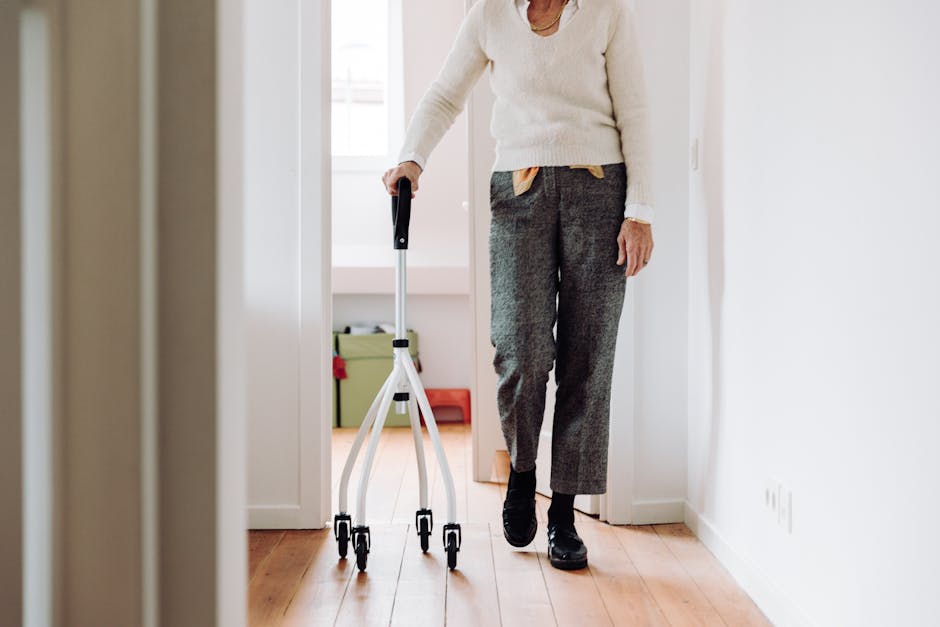
How to Help an Elderly Parent Accept a Walker or Cane
Your parent has had two falls. The doctor recommended a walker six months ago. The walker is in the closet. Your parent insists they do not need it. This is one of the most common and most frustrating situations in elder care , and it is almost never about the walker itself.
Quick answers
- Resistance to mobility aids is almost always about identity, not the equipment
- A cane is often accepted before a walker , start with the least visible aid that addresses the safety need
- Peer examples are more persuasive than family arguments , find someone they respect who uses the equipment
- An occupational therapist can make the recommendation in a clinical context that carries more authority
- Frame it as increasing independence, not acknowledging decline
Why They Resist
A walker is not just a mobility aid. For many older adults, it is a visible symbol of becoming old and dependent , and everything that implies about loss of identity, loss of capability, and proximity to the end of life.
Your parent is not being irrational. They are making a rational calculation: using the walker feels like giving something up. Not using it feels like retaining something. The risk calculation of falling is abstract; the identity cost of the walker is immediate and visible every time they look at it.
The argument 'you might fall' rarely works against this because your parent has already weighed the fall risk and decided they would rather take that risk than accept the identity shift the walker represents. Arguing harder does not change the underlying calculation.
What Actually Changes the Calculation
Reframe from decline to independence
'With the walker, you can go to the grocery store safely by yourself. Without it, someone has to come with you every time.' This frames the equipment as enabling independence rather than marking its loss. It is a true statement and it addresses the actual underlying concern.
Start with the least visible option
A cane carries less stigma than a walker. A forearm crutch carries less stigma than a standard cane. A rollator walker is often more accepted than a standard walker because it looks more active and less institutional. Start with whatever addresses the safety need with the least identity cost.
Find a peer example
Your parent is unlikely to be persuaded by your argument alone. Find someone they respect , a friend, a fellow church member, a sibling , who uses a walker or cane and can speak to what it is like. Peer modeling is far more persuasive than family pressure for most adults.
Have the physician or occupational therapist make the recommendation
A clinical recommendation in a medical context carries different authority than the same recommendation from an adult child. Ask your parent's doctor to address it directly in an appointment. Alternatively, an occupational therapist can conduct a home safety assessment and make recommendations in a professional context.
Let them choose the equipment
Involve your parent in selecting the specific walker or cane. There is significant variation in style , lighter options, sleeker designs, colors other than aluminum grey. A person who feels ownership of the equipment is more likely to use it.
For Wheelchairs and More Significant Equipment
The same dynamics apply but are amplified for wheelchairs and other more significant equipment. The identity cost is higher, the resistance is typically stronger, and the timeline for acceptance is longer.
A trial period often helps. 'Try using the wheelchair just for longer outings , the mall, the airport , for the next month. Keep walking at home.' This lowers the perceived permanence and identity commitment. Many people who accept the equipment 'just for difficult situations' gradually expand its use as they experience the benefit.
For parents who are cognitively impaired and resistant to equipment, involve the care team. Occupational therapists who specialize in dementia care have specific approaches to introducing mobility aids to people who cannot fully process the reasoning.
After Falls Have Happened
A fall that results in injury sometimes changes the calculation. The abstract risk becomes concrete. Many older adults who refused equipment before a fall accept it afterward.
If your parent has had a significant fall, use the recovery period to introduce the equipment in a way that is framed around getting back to independence rather than marking further decline. 'The walker gets you back on your feet and back to being able to do things yourself' is a different framing than the one that drove the previous refusal.
Step 1 of 2
How big is the home?
Step 2 of 2
What kind of help is needed?
Estimated Cost
Compare listed Senior Move Managers →Frequently Asked Questions
What if my parent uses the walker at the doctor's office but refuses at home?
This is common. Reframe home use around the specific situations where risk is highest: walking on uneven surfaces, getting up from a chair, navigating to the bathroom at night. Start with targeted use rather than all-day use.
Can a doctor require a parent to use a walker?
A doctor can recommend and document the recommendation, but cannot force a cognitively intact adult to use mobility equipment. The recommendation carries weight, especially for insurance and liability purposes, and is worth having clearly stated in the medical record.
My parent uses the cane as a prop but does not actually lean on it. Is that okay?
Partial use is better than no use. The habit of having it in hand is the first step. Most people gradually shift to relying on it more as they experience its benefit.
Are there stylish options for walkers and canes?
Yes. Companies like Hugo Mobility, Drive Medical, and others produce equipment in non-institutional styles and colors. Canes in particular come in a wide range of designs. Giving your parent an appealing option reduces some of the identity cost.
Sources
- American Occupational Therapy Association - Occupational therapy and assistive device use for older adults
- National Institute on Aging - Fall prevention and mobility aid use for older adults
- Family Caregiver Alliance - Assistive technology and equipment for older adults , how to introduce and support use
What is a Senior Move Manager? A Senior Move Manager is a trained specialist who helps older adults and their families navigate moves, downsizing, and care transitions. They handle the logistics so you don't have to.
An SMM can help assess a parent's home for safety adaptations that complement mobility aids, making the overall environment safer without requiring constant family supervision.
✓ 556 listed Senior Move Managers · ✓ Coverage in 46 states and DC